Montessori Method
Montessori curriculum is designed to support the whole child through hands-on learning, practical life experiences, language, math, sensorial work, and cultural exploration.
Curriculum Areas
Montessori classrooms are organized into key learning areas that help children grow academically, socially, emotionally, and physically.
Children learn everyday skills such as pouring, buttoning, cleaning, organizing, and caring for themselves and their surroundings.
Materials help children refine their senses and understand size, shape, color, texture, sound, and order through hands-on exploration.
Children build vocabulary, listening, phonics, reading readiness, writing skills, and confidence in communication.
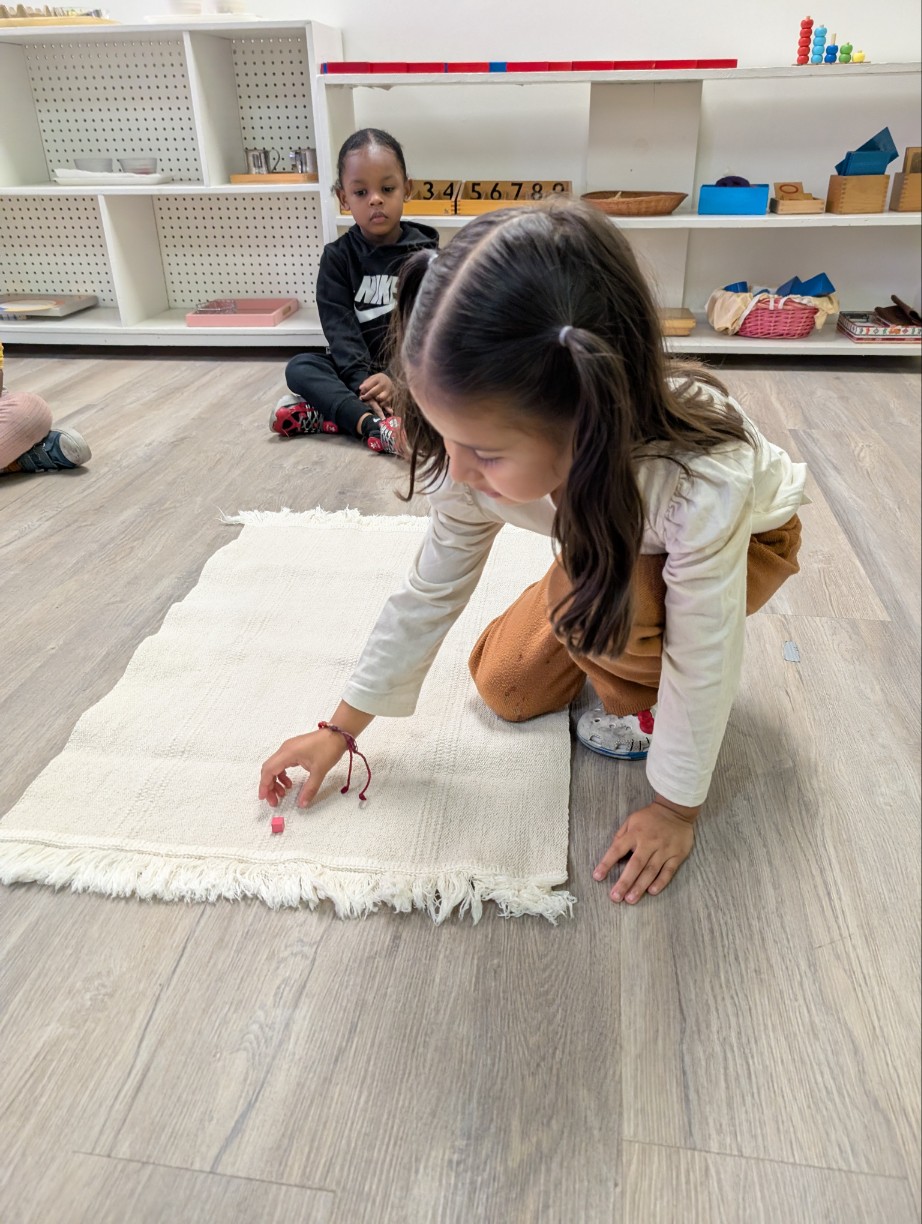
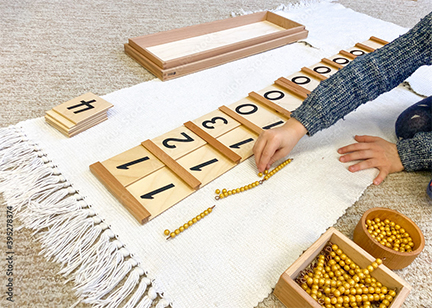
Children use concrete materials to understand numbers, quantity, sequencing, place value, and early operations.
Geography, science, nature, music, art, and appreciation of the world around them are introduced in meaningful and age-appropriate ways.
Children practice kindness, respect, patience, listening, and positive social interactions as part of daily classroom life.
Practical Life
Practical life activities are a central part of Montessori education. Through purposeful work, children develop coordination, concentration, order, and independence.
These activities also help children build confidence and prepare them for more advanced academic learning.
Language and Math
Montessori classrooms introduce language and mathematics through materials that allow children to see, touch, and understand concepts in concrete ways.
This helps children move naturally from hands-on experiences to abstract understanding with confidence and enjoyment.
Whole-Child Development
Montessori curriculum supports concentration, independence, social growth, emotional development, and a lifelong love of learning.
Continue Exploring
Contact Us
We would love to show you how our Montessori curriculum supports each child’s growth.
Phone: (213) 369-1620
Email: info@shalommontessori.school
Address: 230 S Idaho St, La Habra, CA 90631